
Name: Corn Oil
CAS No: Corn oil [8001-30-7]
BP: Refined Maize Oil JP: Corn Oil PhEur: Maize Oil, Refined USP-NF: Corn Oil
Maize oil; Majsao CT; maydis oleum raffinatum; maydol.
Corn oil [8001-30-7]
Corn oil is composed of fatty acid esters with glycerol, known commonly as triglycerides. Typical corn oil produced in the USA contains five major fatty acids: linoleic 58.9%; oleic 25.8%; palmitic 11.0%; stearic 1.7%; and linolenic 1.1%. Corn grown outside the USA yields corn oil with lower linoleic, higher oleic, and higher saturated fatty acid levels. Corn oil also contains small quantities of plant sterols. The USP32–NF27 describes corn oil as the refined fixed oil obtained from the embryo of Zea mays Linne´ (Fam. Gramineae
See Section 4.
Corn oil is used primarily in pharmaceutical formulations as a solvent for intramuscular injections or as a vehicle for topical preparations. Emulsions containing up to 67% corn oil are also used as oral nutritional supplements; see also Section 18. When combined with surfactants and gel-forming polymers, it is used to formulate veterinary vaccines. Corn oil has a long history of use as an edible oil and may be used in tablets or capsules for oral administration
Clear, light yellow-colored, oily liquid with a faint characteristic odor and slightly nutty, sweet taste resembling cooked sweet corn
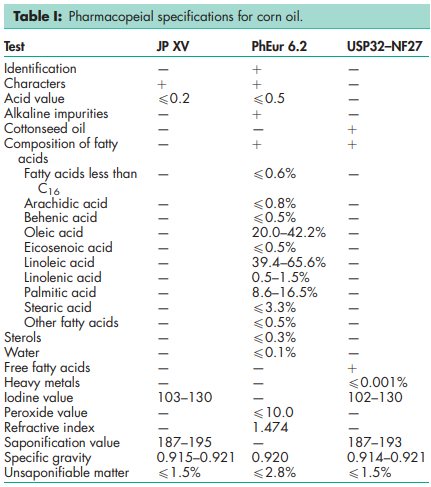
See Table 1
Acid value 2–6 Autoignition temperature 3938C Density 0.915–0.918 g/cm3 Flash point 3218C Hydroxyl value 8–12 Iodine value 109–133 Melting point 18 to 108C Refractive index n D 25 = 1.470–1.474; n D 40 = 1.464–1.468. Saponification value 187–196 Solubility Miscible with benzene, chloroform, dichloromethane, ether, hexane, and petroleum ether; practically insoluble in ethanol (95%) and water. Viscosity (dynamic) 37–39 mPa s (37–39 cP)
Corn oil is stable when protected with nitrogen in tightly sealed bottles. Prolonged exposure to air leads to thickening and rancidity. Corn oil may be sterilized by dry heat, maintaining it at 1508C for 1 hour.(1) Corn oil should be stored in an airtight, light-resistant container in a cool, dry place. Exposure to excessive heat should be avoided.
The photooxidation of corn oil is sensitized by cosmetic and druggrade samples of coated titanium oxide and zinc oxide.(2)
Refined corn oil is obtained from the germ or embryo of Zea mays Linne´ (Fam. Gramineae), which contains nearly 50% of the fixed oil compared with 3.0–6.5% in the whole kernel. The oil is obtained from the embryo by expression and/or solvent extraction. Refining involves the removal of free fatty acids, phospholipids, and impurities; decolorizing with solid adsorbents; dewaxing by chilling; and deodorization at high temperature and under vacuum
Corn oil is generally regarded as a relatively nontoxic and nonirritant material with an extensive history of usage in food preparation
Observe normal precautions appropriate to the circumstances and quantity of material handled. Spillages of this material are very slippery and should be covered with an inert absorbent material prior to disposal.
Included in the FDA Inactive Ingredients Database (IM injections, oral capsules, suspensions, and tablets). Included in the Canadian List of Acceptable Non-medicinal Ingredients.
Almond oil; canola oil; cottonseed oil; peanut oil; propyl gallate; sesame oil; soybean oil; sunflower oil.
Owing to its high content of unsaturated acids, corn oil has been used as a replacement for fats and oils containing a high content of saturated acids in the diets of patients with hypercholesterolemia. A specification for corn oil is contained in the Food Chemicals Codex (FCC).(3) The EINECS number for corn oil is 232-281-2.