
Name: Cresol
CAS No: Methylphenol [1319-77-3]
BP: Cresol JP: Cresol USP-NF: Cresol
Cresylic acid; cresylol; hydroxytoluene; tricreso
Methylphenol [1319-77-3]
C7H8O 108.14
m-Cresol
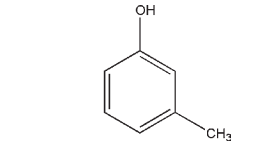
Cresol is used at 0.15–0.3% concentration as an antimicrobial preservative in intramuscular, intradermal, and subcutaneous injectable pharmaceutical formulations. It is also used as a preservative in some topical formulations and as a disinfectant. Cresol is not suitable as a preservative for preparations that are to be freeze-dried.(1)
Cresol consists of a mixture of cresol isomers, predominantly mcresol, and other phenols obtained from coal tar or petroleum. It is a colorless, yellowish to pale brownish-yellow, or pink-colored liquid, with a characteristic odor similar to phenol but more tarlike. An aqueous solution has a pungent taste.
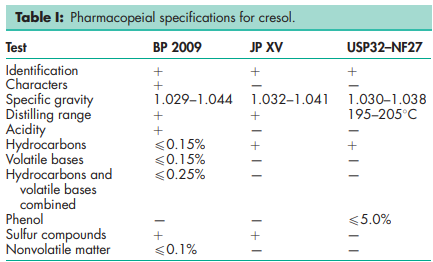
See Table I.
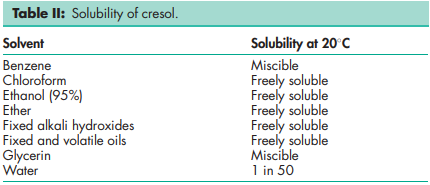
Acidity/alkalinity A saturated aqueous solution is neutral or slightly acidic to litmus. Antimicrobial activity Cresol is similar to phenol but has slightly more antimicrobial activity. It is moderately active against Gram-positive bacteria, less active against Gram-negative bacteria, yeasts, and molds. Cresol is active below pH 9; optimum activity is obtained in acidic conditions. Synergistic effects between cresol and other preservatives have been reported.(2,3) When used as a disinfectant most common pathogens are killed within 10 minutes by 0.3–0.6% solutions. Cresol has no significant activity against bacterial spores. Solubilit
Cresol and aqueous cresol solutions darken in color with age and on exposure to air and light. Cresol should be stored in a well-closed container, protected from light, in a cool, dry place.
Cresol has been reported to be incompatible with chlorpromazine.(4) Antimicrobial activity is reduced in the presence of nonionic surfactants.
Cresol may be obtained from coal tar or prepared synthetically by either sulfonation or oxidation of toluene.
Reports of adverse reactions to cresol are generally associated with the use of either the bulk material or cresol-based disinfectants, which may contain up to 50% cresol, rather than for its use as a preservative. However, a recent case of cutaneous hypersensitivity reaction to the m-cresol component of an insulin formulation detected via intradermal and patch testing has been reported.(5) Cresol is similar to phenol although it is less caustic and toxic. However, cresol is sufficiently caustic to be unsuitable for skin and wound disinfection. In studies in rabbits, cresol was found to be metabolized and excreted primarily as the glucuronide.(6) A patient has survived ingestion of 12 g of cresol though with severe adverse effects.(7) LD50 (mouse, oral): 0.76 g/kg(8) LD50 (rabbit, skin): 2 g/kg LD50 (rat, oral): 1.45 g/kg
Observe normal precautions appropriate to the circumstances and quantity of material handled. Cresol may be irritant to the skin, eyes, and mucous membranes. Eye protection, gloves, and a respirator are recommended. In the USA, the permissible and recommended exposure limits are 22 mg/m3 long-term and 10 mg/m3 long-term respectively.(9)
Included in the FDA Inactive Ingredients Database (IM, IV, intradermal, and SC injections). Included in parenteral medicines licensed in the UK. Included in the Canadian List of Acceptable Non-medicinal Ingredients
Chlorocresol; m-cresol; o-cresol; p-cresol; phenol. m-Cresol Empirical formula C7H8O Molecular weight 108.14 CAS number [108-39-4] Synonyms m-Cresylic acid; 3-hydroxytoluene; meta-cresol; 3- methylphenol. Appearance Colorless or yellowish liquid with a characteristic phenolic odor. Boiling point 2028C Density 1.034 g/cm3 at 208C Flash point 868C (closed cup) Melting point 11–128C Refractive index n D 20 = 1.5398 Solubility Soluble in organic solvents; soluble 1 in 40 parts of water. Safety LD50 (cat, SC): 0.15 g/kg(8,10) LD50 (mouse, IP): 0.17 g/kg LD50 (mouse, oral): 0.83 g/kg LD50 (mouse, SC): 0.45 g/kg LD50 (rabbit, IV): 0.28 g/kg LD50 (rabbit, oral): 1.1 g/kg LD50 (rabbit, SC): 0.5 g/kg LD50 (rabbit, skin): 2.05 g/kg LD50 (rat, oral): 2.02 g/kg LD50 (rat, skin): 1.1 g/kg o-Cresol Empirical formula C7H8O Molecular weight 108.14 CAS number [95-48-7] Synonyms o-Cresylic acid; 2-hydroxytoluene; 2-methylphenol; ortho-cresol. Appearance Colorless deliquescent solid with a characteristic odor; it becomes yellow on storage. Boiling point 191–1928C Density 1.047 g/cm3 at 208C Flash point 81–838C (closed cup) Melting point 308C Refractive index n D 20 = 1.553 Safety LD50 (cat, SC): 0.6 g/kg(8,10) LD50 (mouse, oral): 0.34 g/kg LD50 (mouse, SC): 0.35 g/kg LD50 (mouse, skin): 0.62 g/kg LD50 (rabbit, IV): 0.2 g/kg LD50 (rabbit, oral): 0.8 g/kg LD50 (rabbit, SC): 0.45 g/kg LD50 (rat, oral): 1.35 g/kg LD50 (rat, skin): 0.62 g/kg p-Cresol Empirical formula C7H8O Molecular weight 108.14 CAS number [106-44-5] Synonyms p-Cresylic acid; 4-hydroxytoluene; 4-methylphenol; para-cresol. Appearance Crystalline solid. Boiling point 201.88C Density 1.0341 g/cm3 at 208C Flash point 868C (closed cup) Melting point 35.58C Refractive index n D 20 = 1.5395 Solubility Soluble in ethanol (95%) and ether; very slightly soluble in water. Safety LD50 (cat, SC): 0.08 g/kg(8,10) LD50 (mouse, IP): 0.03 g/kg LD50 (mouse, oral): 0.34 g/kg LD50 (mouse, SC): 0.15 g/kg LD50 (rabbit, IV): 0.16 g/kg LD50 (rabbit, oral): 1.1 g/kg LD50 (rabbit, SC): 0.3 g/kg LD50 (rabbit, skin): 0.3 g/kg LD50 (rat, oral): 1.80 g/kg LD50 (rat, skin): 0.75 g/kg
m-Cresol is generally considered the least toxic of the three cresol isomers.(10) Inhalation of aerosolized m-cresol in pulmonary insulin delivery formulations has been shown to be safe in animal models.(11) The PhEur 6.0 contains a specification for cresol, crude. The EINECS number for cresol is 203-577-9. The PubChem Compound ID (CID) for m-cresol is 342.