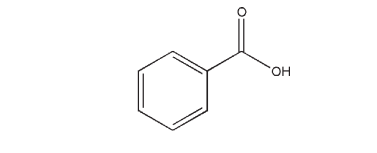
Name: Benzoic Acid
CAS No: Benzoic acid [65-85-0]
BP: Benzoic Acid JP: Benzoic Acid PhEur: Benzoic Acid USP: Benzoic Acid
Acidum benzoicum; benzenecarboxylic acid; benzeneformic acid; carboxybenzene; dracylic acid; E210; phenylcarboxylic acid; phenylformic acid.
Benzoic acid [65-85-0]
C7H6O2 122.12
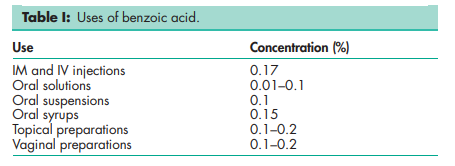
Benzoic acid is widely used in cosmetics, foods, and pharmaceuticals (see Table I), as an antimicrobial preservative.(1–3) Greatest activity is seen at pH values between 2.5–4.5; see Section 10. Benzoic acid also has a long history of use as an antifungal agent(4) in topical therapeutic preparations such as Whitfield’s ointment (benzoic acid 6% and salicylic acid 3%).
Benzoic acid occurs as feathery, light, white or colorless crystals or powder. It is essentially tasteless and odorless or with a slight characteristic odor suggestive of benzoin.
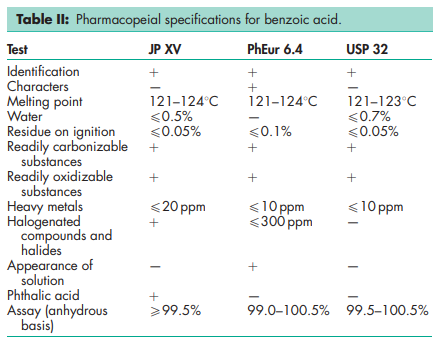
See Table II.
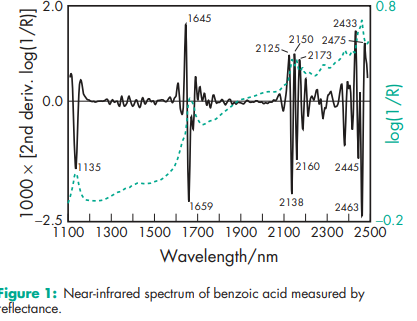
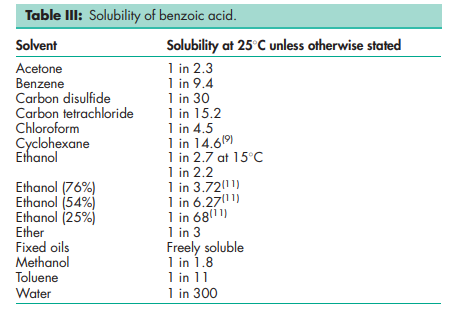
Acidity/alkalinity pH = 2.8 (saturated aqueous solution at 258C) Antimicrobial activity Only the undissociated acid shows antimicrobial properties; the activity therefore depends on the pH of the medium. Optimum activity occurs at pH values below 4.5; at values above pH 5, benzoic acid is almost inactive.(5) It has been reported that antimicrobial activity is enhanced by the addition of protamine, a basic protein.(6) Bacteria Moderate bacteriostatic activity against most species of Gram-positive bacteria. Typical MIC is 100 mg/mL. Activity is less, in general, against Gram-negative bacteria. MIC for Gram-negative bacteria may be up to 1600 mg/mL. Molds Moderate activity. Typical MICs are 400–1000 mg/mL at pH 3; 1000–2000 mg/mL at pH 5. Spores Inactive against spores. Yeasts Moderate activity. Typical MIC is 1200 mg/mL. The addition of propylene glycol may enhance the fungistatic activity of benzoic acid. Autoignition temperature 5708C Boiling point 249.28C Density 1.311 g/cm3 for solid at 248C; 1.075 g/cm3 for liquid at 1308C. Dissociation constant The dissociation of benzoic acid in mixed solvents is dictated by specific solute–solvent interactions as well as by relative solvent basicity. Increasing the organic solvent fraction favors the free acid form.(7) pKa = 4.19 at 258C; pKa = 5.54 in methanol 60%. Flash point 121–1318C Melting point 1228C (begins to sublime at 1008C) Moisture content 0.17–0.42% w/w NIR spectra see Figure 1. Partition coefficients Benzene : water = 0.0044;(8) Cyclohexane : water = 0.30;(9) Octanol : water = 1.87.(10) Refractive index nD 15 = 1.5397 for solid; nD 132 = 1.504 for liquid. Solubility Apparent aqueous solubility of benzoic acid may be enhanced by the addition of citric acid or sodium acetate to the solution; see Table III.
Aqueous solutions of benzoic acid may be sterilized by autoclaving or by filtration. A 0.1% w/v aqueous solution of benzoic acid has been reported to be stable for at least 8 weeks when stored in polyvinyl chloride bottles, at room temperature.(12) When added to a suspension, benzoic acid dissociates, with the benzoate anion adsorbing onto the suspended drug particles. This adsorption alters the charge at the surface of the particles, which may in turn affect the physical stability of the suspension.(13–15) The addition of sodium azide has been shown to increase the stability of benzoic acid in skin permeation experiments.(16) The bulk material should be stored in a well-closed container in a cool, dry place
Undergoes typical reactions of an organic acid, e.g. with alkalis or heavy metals. Preservative activity may be reduced by interaction with kaolin.(17)
Although benzoic acid occurs naturally, it is produced commercially by several synthetic methods. One process involves the continuous liquid-phase oxidation of toluene in the presence of a cobalt catalyst at 150–2008C and 0.5–5.0 MPa (5.0–50.0 atm) pressure to give a yield of approximately 90% benzoic acid. Benzoic acid can also be produced commercially from benzotrichloride or phthalic anhydride. Benzotrichloride, produced by chlorination of toluene, is reacted with 1 mole of benzoic acid to yield 2 moles of benzoyl chloride. The benzoyl chloride is then converted to 2 moles of benzoic acid by hydrolysis. Yield is 75–80%. In another commercial process, phthalic anhydride is converted to benzoic acid, in about an 85% yield, by hydrolysis in the presence of heat and chromium and disodium phthalates. Crude benzoic acid is purified by sublimation or recrystallization
Ingested benzoic acid is conjugated with glycine in the liver to yield hippuric acid, which is then excreted in the urine;(18) care should be taken when administering benzoic acid to patients with chronic liver disease.(19) Benzoic acid is a gastric irritant, and a mild irritant to the skin.(20–23) It is also a mild irritant to the eyes and mucous membranes.(24) Allergic reactions to benzoic acid have been reported, although a controlled study indicated that the incidence of urticaria in patients given benzoic acid is no greater than in those given a lactose placebo.(25) It has been reported that asthmatics may become adversely affected by benzoic acid contained in some antiasthma drugs.(26) The WHO acceptable daily intake of benzoic acid and other benzoates, calculated as benzoic acid, has been set at up to 5 mg/kg body-weight.(27,28) The minimum lethal human oral dose of benzoic acid is 500 mg/kg body-weight.(29,30) LD50 (cat, oral): 2 g/kg(29) LD50 (dog, oral): 2 g/kg LD50 (mouse, IP): 1.46 g/kg LD50 (mouse, oral): 1.94 g/kg LD50 (rat, oral): 1.7 g/kg See also Sodium benzoate.
Observe normal precautions appropriate to the circumstances and quantity of material handled. Benzoic acid may be harmful by inhalation, ingestion, or skin absorption and may be irritant to the eyes, skin, and mucous membranes. Benzoic acid should be handled in a well-ventilated environment; eye protection, gloves, and a dust mask or respirator are recommended. Benzoic acid is flammable.
GRAS listed. Accepted as a food additive in Europe. Included in the FDA Inactive Ingredients Database (IM and IV injections, irrigation solutions, oral solutions, suspensions, syrups and tablets, rectal, topical, and vaginal preparations). Included in nonparenteral medicines licensed in the UK. Included in the Canadian List of Acceptable Non-medicinal Ingredients.
Potassium benzoate; sodium benzoate.
Benzoic acid is known to dimerize in many nonpolar solvents. This property, coupled with pH-dependent dissociation in aqueous media, comprises a classic textbook example of the effects of dissociation and molecular association on apparent partitioning behavior. The principles involved may be practically applied in determination of the total concentration of benzoate necessary to provide a bacteriostatic level of benzoic acid in the aqueous phase of an oil-in-water emulsion. A specification for benzoic acid is contained in the Food Chemicals Codex (FCC).(31) The EINECS number for benzoic acid is 200-618-2. The PubChem Compound ID (CID) for benzoic acid is 243.