Name: Hydrocarbons (HC)
CAS No: (a) Butane [106-97-8] (2b-)Methylpropane [75-28-5] (Pcr)opane [74-98-6]
(a) USP-NF: Butane (b) USP-NF: Isobutane (c) USP-NF: Propane
(a) A-17; Aeropres 17; n-butane; E943a (b) A-31; Aeropres 31; E943b; 2-methylpropane (c) A-108; Aeropres 108; dimethylmethane; E944; propyl hydride
(a) Butane [106-97-8] (2b-)Methylpropane [75-28-5] (Pcr)opane [74-98-6]
(a) C4H10 58.12 (b) C4H10 58.12 (c) C3H8 44.10
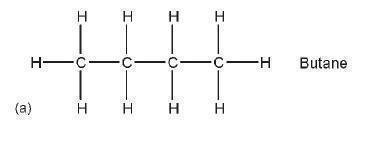
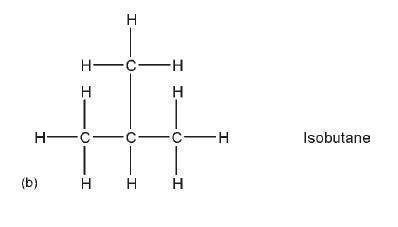
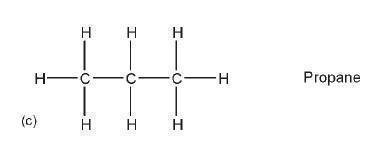
Propane, butane, and isobutane are hydrocarbons (HC). They are used as aerosol propellants: alone, in combination with each other, and in combination with a hydrofluoroalkane (HFA) propellant. They are used primarily in topical pharmaceutical aerosols (particularly aqueous foam and some spray products). Depending upon the application, the concentration of hydrocarbon propellant range is 5–95% w/w. Foam aerosols generally use about 4–5% w/w of a hydrocarbon propellant consisting of isobutane (84.1%) and propane (15.9%), or isobutane alone. Spray-type aerosols utilize propellant concentrations of 50% w/w and higher.(1) Hydrocarbon propellants are also used in cosmetics and food products as aerosol propellants. Only highly purified hydrocarbon grades can be used for pharmaceutical formulations since they may contain traces of unsaturated compounds that not only contribute a slight odor to a product but may also react with other ingredients resulting in decreased stability.
Hydrocarbon propellants are liquefied gases and exist as liquids at room temperature when contained under their own vapor pressure, or as gases when exposed to room temperature and atmospheric pressure. They are essentially clear, colorless, odorless liquids but may have a slight etherlike odor.
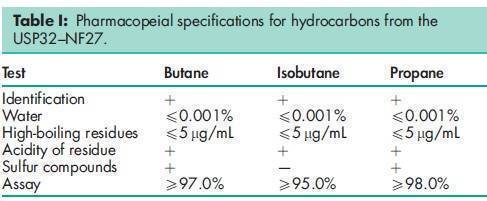
See Table I.
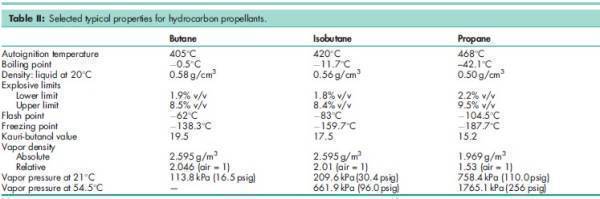
See Table II for selected typical properties.
Butane and the other hydrocarbons used as aerosol propellants are stable compounds and are chemically nonreactive when used as propellants. They are, however, highly flammable and explosive when mixed with certain concentrations of air; see Section 10.(2) They should be stored in a well-ventilated area, in a tightly sealed cylinder. Exposure to excessive heat should be avoided.
Other than their lack of miscibility with water, butane and the other hydrocarbon propellants do not have any practical incompatibilities with the ingredients commonly used in pharmaceutical aerosol formulations. Hydrocarbon propellants are generally miscible with nonpolar materials and some semipolar compounds such as ethanol.
Butane and isobutane are obtained by the fractional distillation, under pressure, of crude petroleum and natural gas. They may be purified by passing through a molecular sieve to remove any unsaturated compounds that are present. Propane is prepared by the same method. It may also be prepared by a variety of synthetic methods.
The hydrocarbons are generally regarded as nontoxic materials when used as aerosol propellants. However, deliberate inhalation of aerosol products containing hydrocarbon propellants can be fatal as they will deplete oxygen in the lungs when inhaled.
Butane and the other hydrocarbon propellants are liquefied gases and should be handled with appropriate caution. Direct contact of liquefied gas with the skin is hazardous and may result in serious cold burn injuries. Protective clothing, rubber gloves, and eye protection are recommended. Butane, isobutane, and propane are asphyxiants and should be handled in a well-ventilated environment; it is recommended that environmental oxygen levels are monitored and not permitted to fall below a concentration of 18% v/v. These vapors do not support life; therefore when cleaning large tanks, adequate provisions for oxygen supply must be provided for personnel cleaning the tanks. Butane is highly flammable and explosive and must only be handled in an explosion-proof room that is equipped with adequate safety warning devices and explosion-proof equipment. To fight fires, the flow of gas should be stopped and dry powder extinguishers should be used.
GRAS listed. Butane, isobutane, and propane are accepted for use as food additives in Europe. Included in the FDA Inactive Ingredients Database (aerosol formulations for topical application). Included in nonparental medicines licensed in the UK. Included in the Canadian List of Acceptable Non-medicinal Ingredients.
Dimethyl ether.
Although hydrocarbon aerosol propellants are relatively inexpensive, nontoxic, and environmentally friendly (since they are not damaging to the ozone layer and are not greenhouse gases), their use is limited by their flammability. While hydrocarbon propellants are primarily used in topical aerosol formulations, it is possible that butane may also be useful in metered-dose inhalers as a replacement for chlorofluorocarbons. Various blends of hydrocarbon propellants that have a range of physical properties suitable for different applications are commercially available, e.g. A-46 ( Aeropres) is a commonly used mixture for aerosol foams and consists of about 85% isobutane and 15% propane. The number following the letter denotes the approximate vapor pressure of the blend or mixture. The PubChem Compound IDs (CIDs) for butane, isobutane and propane are 7843, 6360, and 6334 respectively.