Name: Maltitol Solution
CAS No: Maltitol solution [9053-46-7]
BP: Liquid Maltitol PhEur: Maltitol, Liquid USP-NF: Maltitol Solution
E965; hydrogenated glucose syrup; Finmalt L; Lycasin HBC; Lycasin 80/55; Maltisorb 75/75; Maltisweet 3145; maltitol syrup; maltitolum liquidum.
Maltitol solution [9053-46-7]
The PhEur 6.0 describes liquid maltitol as an aqueous solution of a hydrogenated, partly hydrolyzed starch, with not less than 68% w/w of solid matter and not more than 85% w/w. This is composed of a mixture of mainly D-maltitol (550% w/w), D-sorbitol (48% w/w), and hydrogenated oligo- and polysaccharides, all quoted on an anhydrous basis. The USP32–NF27 describes maltitol solution as a water solution containing, on the anhydrous basis, not less than 50% w/w of Dmaltitol (C12H24O11) and not more than 8.0% w/w of D-sorbitol (C6H14O6
See Section 4.
Maltitol solution is used in oral pharmaceutical formulations as a bulk sweetening agent, either alone or in combination with other excipients, such as sorbitol. Maltitol solution is also used as a suspending agent in oral suspensions as an alternative to sucrose syrup since it is viscous, noncariogenic, and has a low calorific value. It is also noncrystallizing and therefore prevents ‘cap-locking’ in syrups and elixirs. Maltitol solution is additionally used in the preparation of pharmaceutical lozenges,(1) and is also used in confectionery and food products.
Maltitol solution is a colorless and odorless, clear viscous liquid. It is sweet-tasting (approximately 75% the sweetness of sucrose).
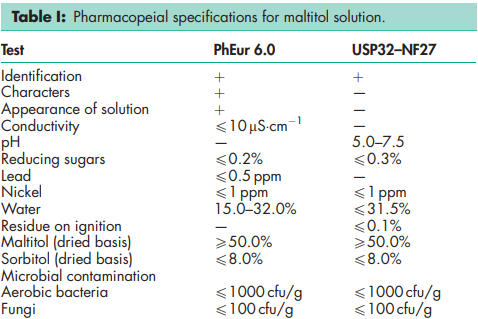
See Table I.
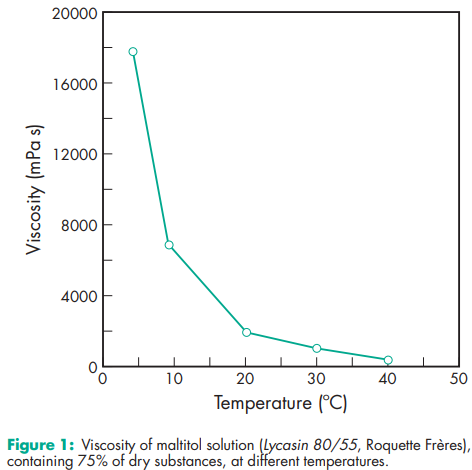
Boiling point 1058C Flash point >1508C Density 1.36 g/cm3 at 208C Heat of combustion 10.0 kJ/g (2.4 kcal/g) Osmolarity The osmolarity of an aqueous maltitol solution is similar to that of a sucrose solution of the same concentration. A 10% v/v aqueous solution of Lycasin 80/55 (Roquette) is isoosmotic with serum. Refractive index nD 20 = 1.478 Solubility Miscible with ethanol (provided the ethanol concentration is less than 55%), glycerin, propylene glycol, and water. Insoluble in mineral and vegetable oils. Viscosity (dynamic) Maltitol solution is a viscous, syrupy, liquid. At 208C, a solution of Lycasin 80/55 (Roquette) containing 75% of dry substances has a viscosity of approximately 2000 mPa s (2000 cP). With increasing temperature, the viscosity of a maltitol solution is reduced; see Figure 1. The viscosity of maltitol solutions also decreases with decreasing concentration of dry solids, at a constant temperature. Maltitol solution may also be mixed with sorbitol solution to obtain blends of a desired viscosity
Maltitol solution is stable for at least 2 years at room temperature and pH 3–9. Following storage for 3 months at 508C, maltitol solution at pH 2 underwent slight hydrolysis (1.2%) and became yellow colored. At pH 3, and the same storage conditions, no color change was apparent although very slight hydrolysis occurred (0.2%). At pH 4–9, no hydrolysis occurred although a very slight yellow color was formed under alkaline conditions.(2) Formulations containing maltitol solution should be preserved with an antimicrobial preservative such as sodium benzoate or a mixture of parabens. Maltitol solution is noncrystallizing. Maltitol solution should be stored in a well-closed container, in a cool, dry place.
Maltitol solution is prepared by the hydrogenation of a highmaltose syrup that is obtained from starch by enzymatic hydrolysis. The maltitol solution produced from this process consists of the hydrogenated homologs of the oligosaccharides contained in the original syrup.
Maltitol solution is used in oral pharmaceutical formulations, confectionery, and food products, and is considered to be less cariogenic than sucrose.(3–6) It is generally regarded as a nontoxic, nonallergenic, and nonirritant material. However, excessive oral consumption (more than 50 g daily) may cause flatulence and diarrhea. The WHO, in considering the safety of maltitol solution, did not set a value for the acceptable daily intake since the levels used in food to achieve a desired effect were not considered a hazard to health.(7,8) LD50 (rat, IP): 20 g/kg(9)
Observe normal precautions appropriate to the circumstances and quantity of material handled.
Accepted for use in confectionery, foods, and nonparenteral pharmaceutical formulations in Europe and the USA. Included in the Canadian List of Acceptable Non-medicinal Ingredients.
Maltitol; sorbitol.
Hydrogenated glucose syrup is a generic term used to describe aqueous mixtures containing mainly D-maltitol, along with Dsorbitol and hydrogenated oligosaccharides and polysaccharides. Such mixtures can vary widely in their composition and hence physical and chemical properties. Products containing up to 90% of maltitol are usually known as maltitol syrup or maltitol solution. Preparations containing a minimum of 98% of maltitol are designated maltitol.