
Name: Methionine
CAS No: (2S)-2-Amino-4-methylsulfanylbutanoic acid [63-68-3]
BP: Methionine JP: L-Methionine PhEur: Methionine USP: Methionine
a-Amino-g-methylmercaptobutyric acid; (S)-2-amino-4- (methylthio)butanoic acid; 2-amino-4-(methylthio)butyric acid; Lmethionine; methioninum; g-methylthio-a-aminobutyric acid.
(2S)-2-Amino-4-methylsulfanylbutanoic acid [63-68-3]
C5H11NO2S 149.21
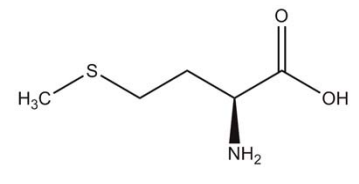
Methionine is used in oral pharmaceutical formulations as a flavoring agent.(1) It has been included in parenteral formulations as a pH controlling agent,(2) and it has also been used experimentally as an antioxidant with antibodies.(3) Methionine is also used therapeutically in oral tablets
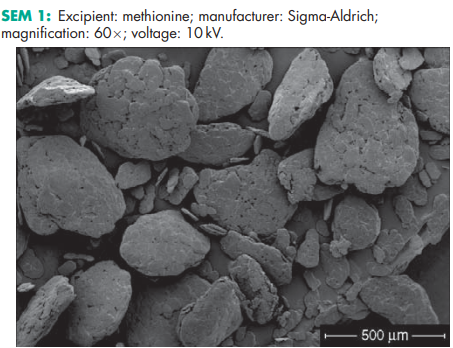
Methionine occurs as a white or almost white, crystalline powder or colorless crystals.
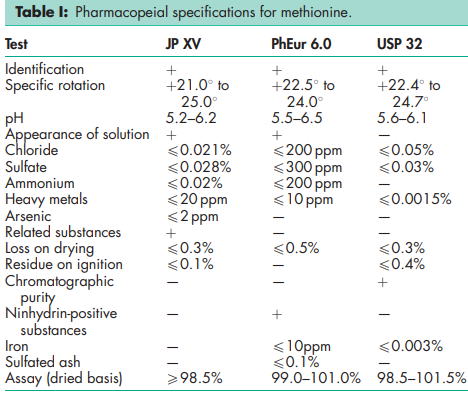
See Table I.
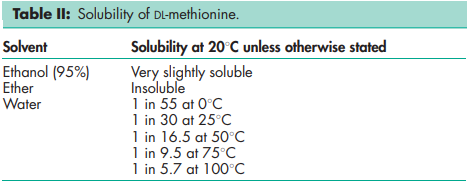
Acidity/alkalinity pH = 5.6–6.1 (1% w/v aqueous solution)(1) Density 1.34 g/cm3(1) Melting point 280–2828C(4) Solubility Soluble in water, dilute acids, and alkalis. Insoluble in absolute ethanol, ethanol (95%), benzene, acetone, and ether.
Methionine is sensitive to light and should be stored in a cool, dark place.
Methionine is incompatible with strong oxidizing agents.
Numerous methods have been described for manufacture of methionine, including hydrolysis of methionine amide(5)and 5-(bmethylmercaptoethyl)-hydantoin.(6)
Methionine is used in oral pharmaceutical formulations. The pure form of methionine is mildly toxic by ingestion and by the IP route. LD50 (rat, IP): 4.328 g/kg(7) LD50 (rat, oral): 36 g/kg
Observe normal precautions appropriate to the circumstances and quantity of the material handled.
Included in the FDA Inactive Ingredients Database (oral tablets). Included in parenteral preparations (injection solutions; powders for reconstitution) licensed in the UK.
D-Methionine; DL-methionine. D-Methionine CAS number [348-67-4] Comments The EINECS number for D-methionine is 206-483-6. DL-Methionine CAS number [59-51-8] Acidity/alkalinity pH = 5.6–6.1 (1% w/v aqueous solution) Density 1.34 g/cm3 Dissociation constant pKa1 = 2.28 at 258C; pKa2 = 9.21 at 258C Melting point 2818C Solubility Soluble in dilute acids and alkalis. See also Table II. Comments The EINECS number for DL-methionine is 200-432-1.
Methionine is used in paracetamol poisoning to prevent hepatotoxicity, and is frequently included in paracetamol formulations for this purpose.(8,9) L-Methionine is an essential amino acid and is included in amino acid solutions for parenteral nutrition.(8) It has been used to treat liver disorders and also to lower urinary pH.(8) A specification for L-methionine is contained in the Food Chemicals Codex (FCC).(10) The EINECS number for L-methionine is 200-562-9. The PubChem Compound ID (CID) for L-methionine is 6137