
Name: Mineral Oil, Light
CAS No: Light mineral oil [8012-95-1]
BP: Light Liquid Paraffin JP: Light Liquid Paraffin PhEur: Paraffin, Light Liquid USP-NF: Light Mineral Oil
905 (mineral hydrocarbons); Citation; light liquid petrolatum; light white mineral oil; paraffinum perliquidum.
Light mineral oil [8012-95-1]
Light mineral oil is a mixture of refined liquid saturated hydrocarbons obtained from petroleum. It is less viscous and has a lower specific gravity than mineral oil.
A mixture of refined liquid hydrocarbons, essentially paraffins and naphthenic in nature, obtained from petroleum.
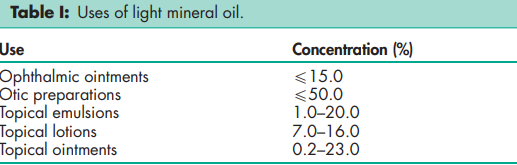
Light mineral oil is used in applications similar to those of mineral oil. It is used primarily as an excipient in topical pharmaceutical formulations where its emollient properties are exploited in ointment bases;(1–3) see Table I. It is also used in ophthalmic formulations.(4,5) Light mineral oil is additionally used in oil-inwater and polyethlylene glycol/glycerol emulsions;(6–9) as a solvent and lubricant in capsules and tablets; as a solvent and penetration enhancer in transdermal preparations;(10) and as the oily medium used in the microencapsulation of many drugs.(11–20) Light mineral oil is also used in cosmetics and certain food products.
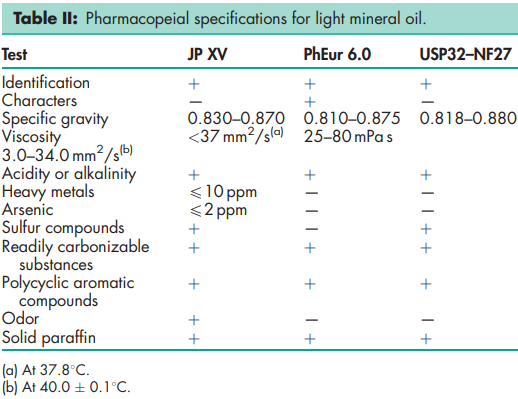
Light mineral oil is a transparent, colorless liquid, without fluorescence in daylight. It is practically tasteless and odorless when cold, and has a faint odor when heated. The USP32–NF27 specifies that light mineral oil may contain a suitable stabilizer.
See Table II.
Solubility Soluble in chloroform, ether, and hydrocarbons; sparingly soluble in ethanol (95%); practically insoluble in water.
Light mineral oil undergoes oxidation when exposed to heat and light. Oxidation begins with the formation of peroxides, exhibiting an ‘induction period’. Under typical storage conditions, the induction period may take months or years. However, once a trace of peroxide is formed, further oxidation is autocatalytic and proceeds very rapidly. Oxidation results in the formation of aldehydes and organic acids, which impart taste and odor. The USP32–NF27 permits the addition of suitable stabilizers to retard oxidation, butylated hydroxyanisole, butylated hydroxytoluene, and alpha tocopherol being the most commonly used antioxidants. Light mineral oil may be sterilized by dry heat. Light mineral oil should be stored in an airtight container in a cool, dry place and protected from light
Incompatible with strong oxidizing agents.
Light mineral oil is obtained by the distillation of petroleum. A suitable stabilizer may be added to the oil; see Section 11. See also Mineral Oil for further information
Light mineral oil is used in applications similar to those of mineral oil. Mineral oil is considered safe by the FDA for direct use in foods. However, oral ingestion of large doses of light mineral oil or chronic consumption may be harmful. Chronic use may impair appetite and interfere with the absorption of fat-soluble vitamins. It is absorbed to some extent when emulsified, leading to granulomatous reactions. Oral and intranasal use of mineral oil or products containing mineral oil by infants or children is not recommended because of the possible danger of causing lipoid pneumonia. See Mineral Oil for further information
Observe normal precautions appropriate to the circumstances and quantity of material handled. Since light mineral oil is combustible, it should not be handled or stored near heat, sparks, or flame. Light mineral oil should not be mixed with or stored with strong oxidants. Inhalation of mineral oil vapors may be harmful.
GRAS listed. Accepted in the UK for use in certain food applications. Light mineral oil is included in the FDA Inactive Ingredients Database (ophthalmic preparations; oral capsules and tablets; otic, rectal, topical, and transdermal preparations). Included in nonparenteral medicines licensed in the UK. Included in the Canadian List of Acceptable Non-medicinal Ingredients.
Mineral oil; mineral oil and lanolin alcohols; paraffin; petrolatum.