
Name: Monothioglycerol
CAS No: 3-Mercapto-1,2-propanediol [96-27-5]
USP-NF: Monothioglycerol
1-Mercaptoglycerol; 1-mercapto-2,3-propanediol; monothioglycerin; a-monothioglycerol; thioglycerin; 1-thioglycerol.
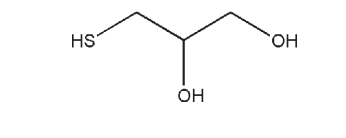
3-Mercapto-1,2-propanediol [96-27-5]
C3H8O2S 108.16
Monothioglycerol is used as an antioxidant in pharmaceutical formulations, mainly in parenteral preparations.(1) Monothioglycerol is reported to have some antimicrobial activity.(2–4) It is also widely used in cosmetic formulations such as depilating agents. Therapeutically, monothioglycerol has been used in a 0.02% w/w aqueous solution to stimulate wound healing, and as a 0.1% w/w jelly in atrophic rhinitis
Monothioglycerol occurs as a colorless or pale-yellow colored, viscous, hygroscopic liquid with a slight odor of sulfide
See Table I.
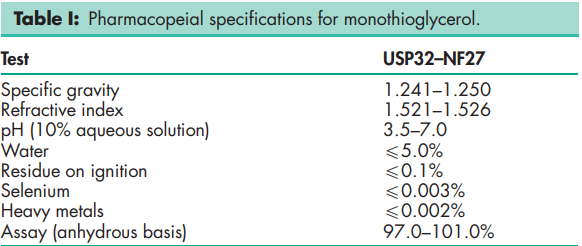
Acidity/alkalinity pH = 3.5–7.0 (10% w/v aqueous solution) Boiling point 1188C Flash point 1108C Refractive index nD 25 = 1.521–1.526 Solubility Miscible with ethanol (95%); freely soluble in water; practically insoluble in ether. Specific gravity 1.241–1.250
Monothioglycerol is unstable in alkaline solutions. Monothioglycerol should be stored in a well-closed container in a cool, dry place.
Monothioglycerol can react with oxidizing materials.
Monothioglycerol is prepared by heating an ethanolic solution of 3- chloro-1,2-propanediol with potassium bisulfide.
Monothioglycerol is generally regarded as a relatively nontoxic and nonirritant material at the concentrations used as a pharmaceutical excipient. It is used in topical and injectable preparations. Undiluted monothioglycerol is considered a poison by the IP and IV routes; it has also been reported to be mutagenic.(5) LD50 (cat, IV): 0.22 g/kg(5) LD50 (mouse, IP): 0.34 g/kg LD50 (rabbit, IV): 0.25 g/kg LD50 (rat, IP): 0.39 g/kg
Observe normal precautions appropriate to the circumstances and quantity of material handled. Monothioglycerol is flammable when exposed to heat or flame; when heated to decomposition it emits toxic fumes of SOx.
Included in the FDA Inactive Ingredients Database (IM, IV and other injections). Included in the Canadian List of Acceptable Nonmedicinal Ingredients
The EINECS number for monothioglycerol is 202-495-0. The PubChem Compound ID (CID) for monothioglycerol includes 7291 and 447638.