
Name: Butylated Hydroxytoluene
CAS No: 2,6-Di-tert-butyl-4-methylphenol [128-37-0]
BP: Butylated Hydroxytoluene PhEur: Butylhydroxytoluene USP-NF: Butylated Hydroxytoluene
Agidol; BHT; 2,6-bis(1,1-dimethylethyl)-4-methylphenol; butylhydroxytoluene; butylhydroxytoluenum; Dalpac; dibutylated hydroxytoluene; 2,6-di-tert-butyl-p-cresol; 3,5-di-tert-butyl-4- hydroxytoluene; E321; Embanox BHT; Impruvol; Ionol CP; Nipanox BHT; OHS28890; Sustane; Tenox BHT; Topanol; Vianol
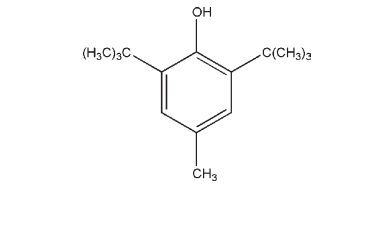
2,6-Di-tert-butyl-4-methylphenol [128-37-0]
C15H24O 220.35
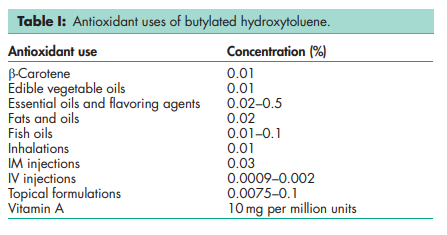
Butylated hydroxytoluene is used as an antioxidant (see Table I) in cosmetics, foods, and pharmaceuticals.(1–4) It is mainly used to delay or prevent the oxidative rancidity of fats and oils and to prevent loss of activity of oil-soluble vitamins. Butylated hydroxytoluene is also used at 0.5–1.0% w/w concentration in natural or synthetic rubber to provide enhanced color stability. Butylated hydroxytoluene has some antiviral activity(5) and has been used therapeutically to treat herpes simplex labialis.(6)
Butylated hydroxytoluene occurs as a white or pale yellow crystalline solid or powder with a faint characteristic phenolic odor.
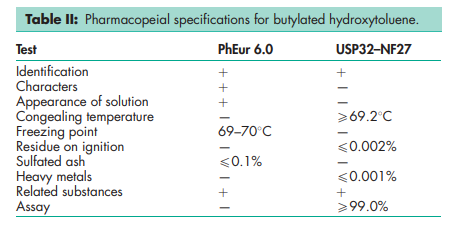
See Table II.
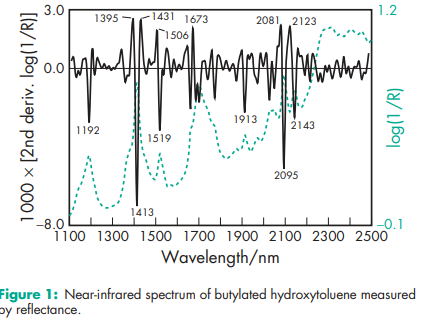
Boiling point 2658C Density (bulk) 0.48–0.60 g/cm3 Density (true) 1.031 g/cm3 Flash point 1278C (open cup) Melting point 708C Moisture content 40.05% NIR spectra see Figure 1. Partition coefficient Octanol : water = 4.17–5.80 Refractive index n D 75 = 1.4859 Solubility Practically insoluble in water, glycerin, propylene glycol, solutions of alkali hydroxides, and dilute aqueous mineral acids. Freely soluble in acetone, benzene, ethanol (95%), ether, methanol, toluene, fixed oils, and mineral oil. More soluble than butylated hydroxyanisole in food oils and fats. Specific gravity 1.006 at 208C; 0.890 at 808C; 0.883 at 908C; 0.800 at 1008C. Specific heat 1.63 J/g/8C (0.39 cal/g/8C) for solid; 2.05 J/g/8C (0.49 cal/g/8C) for liquid. Vapor density (relative) 7.6 (air = 1) Vapor pressure 1.33 Pa (0.01 mmHg) at 208C; 266.6 Pa (2 mmHg) at 1008C. Viscosity (kinematic) 3.47 mm2 /s (3.47 cSt) at 808C.
Exposure to light, moisture, and heat causes discoloration and a loss of activity. Butylated hydroxytoluene should be stored in a wellclosed container, protected from light, in a cool, dry place.
Butylated hydroxytoluene is phenolic and undergoes reactions characteristic of phenols. It is incompatible with strong oxidizing agents such as peroxides and permanganates. Contact with oxidizing agents may cause spontaneous combustion. Iron salts cause discoloration with loss of activity. Heating with catalytic amounts of acids causes rapid decomposition with the release of the flammable gas isobutene
Prepared by the reaction of p-cresol with isobutene
Butylated hydroxytoluene is readily absorbed from the gastrointestinal tract and is metabolized and excreted in the urine mainly as glucuronide conjugates of oxidation products. Although there have been some isolated reports of adverse skin reactions, butylated hydroxytoluene is generally regarded as nonirritant and nonsensitizing at the levels employed as an antioxidant.(7,8) The WHO has set a temporary estimated acceptable daily intake for butylated hydroxytoluene at up to 125 mg/kg body-weight.(9) Ingestion of 4 g of butylated hydroxytoluene, although causing severe nausea and vomiting, has been reported to be nonfatal.(10) LD50 (guinea pig, oral): 10.7 g/kg(11) LD50 (mouse, IP): 0.14 g/kg LD50 (mouse, IV): 0.18 g/kg LD50 (mouse, oral): 0.65 g/kg LD50 (rat, oral): 0.89 g/kg
Observe normal precautions appropriate to the circumstances and quantity of material handled. Butylated hydroxytoluene may be irritant to the eyes and skin and on inhalation. It should be handled in a well-ventilated environment; gloves and eye protection are recommended. Closed containers may explode owing to pressure build-up when exposed to extreme heat.
GRAS listed. Accepted as a food additive in Europe. Included in the FDA Inactive Ingredients Database (IM and IV injections, nasal sprays, oral capsules and tablets, rectal, topical, and vaginal preparations). Included in nonparenteral medicines licensed in the UK. Included in the Canadian List of Acceptable Non-medicinal Ingredients.
Butylated hydroxyanisole
A specification for butylated hydroxytoluene is contained in the Food Chemicals Codex (FCC).(12) The EINECS number for butylated hydroxytoluene is 204-881- 4. The PubChem Compound ID (CID) for butylated hydroxytoluene is 31404