
Name: Ammonia Solution
CAS No: Ammonia [7664-41-7]
BP: Strong Ammonia Solution PhEur: Ammonia Solution, Concentrated USP-NF: Strong Ammonia Solution
Ammoniaca; ammoniacum; ammoniae solution concentrata; aqua ammonia; concentrated ammonia solution; spirit of hartshorn; stronger ammonia water.
Ammonia [7664-41-7]
NH3 17.03
See Section 4.
Ammonia solution is typically not used undiluted in pharmaceutical applications. Generally, it is used as a buffering agent or to adjust the pH of solutions. Most commonly, ammonia solution (the concentrated form) is used to produce more dilute ammonia solutions. Therapeutically, dilute ammonia solution is used as a reflex stimulant in ‘smelling salts’, as a rubefacient, and as a counterirritant to neutralize insect bites or stings.(1
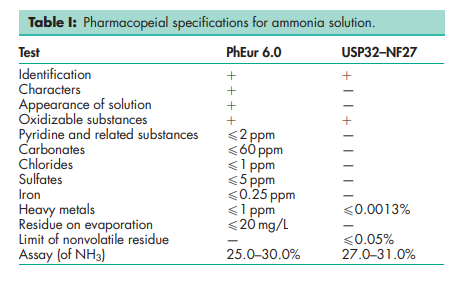
Strong ammonia solution occurs as a clear, colorless liquid having an exceedingly pungent, characteristic odor. The PhEur 6.0 states that concentrated ammonia solution contains not less than 25.0% and not more than 30.0% w/w of ammonia (NH3). The USP32– NF27 states that strong ammonia solution contains not less than 27.0% and not more than 31.0% w/w of ammonia (NH3). See also Section 17.
See Table I.
Solubility Miscible with ethanol (95%) and water. Specific gravity 0.892–0.910
On exposure to the air, ammonia solution rapidly loses ammonia. Ammonia solution should be stored in a well-closed container, protected from the air, in a cool, dry place. The storage temperature should not exceed 208C.
Ammonia solution reacts vigorously with sulfuric acid or other strong mineral acids and the reaction generates considerable heat; the mixture boils
Ammonia is obtained commercially chiefly by synthesis from its constituent elements, nitrogen and hydrogen, which are combined under high pressure and temperature in the presence of a catalyst. Ammonia solution is produced by dissolving ammonia gas in water.
Ingestion of strong solutions of ammonia is very harmful and causes severe pain in the mouth, throat, and gastrointestinal tract as well as severe local edema with cough, vomiting, and shock. Burns to the esophagus and stomach may result in perforation. Inhalation of the vapor causes sneezing, coughing, and, in high concentration, pulmonary edema. Asphyxia has been reported. The vapor is irritant to the eyes. Strong solutions are harmful when applied to the conjunctiva and mucous membranes. Topical application of even dilute ammonia solutions, used to treat insect bites, has caused burns, particularly when used with a subsequent dressing.(2–4) When used as an excipient, ammonia solution is generally present in a formulation in a highly diluted form
Observe normal precautions appropriate to the circumstances and quantity of material handled. Care should be used in handling strong or concentrated ammonia solutions because of the caustic nature of the solution and the irritating properties of its vapor. Before containers are opened, they should be well cooled. The closure should be covered with a cloth or similar material while opening. Ammonia solution should not be tasted and inhalation of the vapor should be avoided. Ammonia solution should be handled in a fume cupboard. Eye protection, gloves, and a respirator are recommended.
Included in the FDA Inactive Ingredients Database (oral suspensions, topical preparations). Included in nonparenteral medicines licensed in the UK. Included in the Canadian List of Acceptable Non-medicinal Ingredients.
Dilute ammonia solution. Dilute ammonia solution Synonyms Ammonia water Specific gravity 0.95–0.96 Comments Several pharmacopeias include monographs for dilute ammonia solution. The JP XV, for example, states that ammonia water contains not less than 9.5% and not more than 10.5% w/v of ammonia (NH3).
Where ‘ammonia solution’ is prescribed therapeutically, dilute ammonia solution should be dispensed or supplied. The EINECS number for ammonia solution is 231-635-3.