
Name: Diethyl Phthalate
CAS No: 1,2-Benzenedicarboxylic acid, diethyl ester [84-66-2]
BP: Diethyl Phthalate PhEur: Diethyl Phthalate USP-NF: Diethyl Phthalate
DEP; diethyl benzene-1,2-dicarboxylate; diethylis phthalas; ethyl benzene-1,2-dicarboxylate; ethyl phthalate; Kodaflex DEP; Neantine; Palatinol A; phthalic acid diethyl ester.
1,2-Benzenedicarboxylic acid, diethyl ester [84-66-2]
C12H14O4 222.24
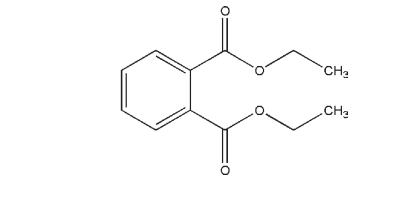
Diethyl phthalate is used as a plasticizer for film coatings on tablets, beads, and granules at concentrations of 10–30% by weight of polymer. Diethyl phthalate is also used as an alcohol denaturant and as a solvent for cellulose acetate in the manufacture of varnishes and dopes. In perfumery, diethyl phthalate is used as a perfume fixative at a concentration of 0.1–0.5% of the weight of the perfume used.
Diethyl phthalate is a clear, colorless, oily liquid. It is practically odorless, or with a very slight aromatic odor and a bitter, disagreeable taste.
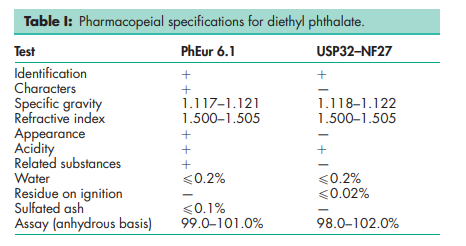
See Table I.
Boiling point 2958C Flash point 1608C (open cup) Melting point 408C Refractive index n D 25 = 1.501 Solubility Miscible with ethanol (95%), ether, and many other organic solvents; practically insoluble in water. Specific gravity 1.120 at 258C Vapor density (relative) 7.66 (air = 1) Vapor pressure 1.87 kPa (14 mmHg) at 1638C
Diethyl phthalate is stable when stored in a well-closed container in a cool, dry place.
Incompatible with strong oxidizing materials, acids, and permanganates.
Diethyl phthalate is produced by the reaction of phthalic anhydride with ethanol in the presence of sulfuric acid.
Diethyl phthalate is used in oral pharmaceutical formulations and is generally regarded as a nontoxic and nonirritant material at the levels employed as an excipient. However, if consumed in large quantities it can act as a narcotic and cause paralysis of the central nervous system. Although some animal studies have suggested that high concentrations of diethyl phthalate may be teratogenic, other studies have shown no adverse effects.(1) LD50 (guinea pig, oral): 8.6 g/kg(2) LD50 (mouse, IP): 2.7 g/kg LD50 (mouse, oral): 6.2 g/kg LD50 (rat, IP): 5.1 g/kg LD50 (rat, oral): 8.6 g/kg
Observe normal precautions appropriate to the circumstances and quantity of material handled. Diethyl phthalate is irritant to the skin, eyes, and mucous membranes. Protective clothing, eye protection, and nitrile gloves are recommended. Diethyl phthalate should be handled in a fume cupboard or a well-ventilated environment; a respirator is recommended. In the UK, the longterm (8-hour TWA) workplace exposure limit for diethyl phthalate is 5 mg/m3 . The short-term (15-minute) workplace exposure limit is 10 mg/m3
Included in the FDA Inactive Ingredients Database (oral capsules, delayed action, enteric coated, and sustained action tablets). Included in nonparenteral medicines licensed in the UK. Included in the Canadian List of Acceptable Non-medicinal Ingredients.
Dibutyl phthalate; dimethyl phthalate.
The EINECS number for diethyl phthalate is 201-550-6. The PubChem Compound ID (CID) for diethyl phthalate is 6781.